
Table of Contents
- Introduction
03 July, 2026
By Dr. Kalpesh Kapadia
Key Takeaways
- Recognize urgent symptoms of kidney stones, such as severe pain and blood in urine, to seek timely care.
- The Best Kidney Stones/Urinary Stones Treatment in Ahmedabad is crucial to prevent complications from untreated kidney stones.
- Small stones may pass naturally, but larger ones often require medical intervention to avoid serious health risks.
- Multiple treatment options are available, including ESWL and ureteroscopy, tailored to the stone's size and location.
- Prevent future kidney stones through hydration, dietary changes, and regular check-ups with a urologist.
That sudden, sharp pain in your side that seems to come out of nowhere could well be a kidney stone and knowing when it's time to stop waiting it out and see a specialist can save you from a much more painful complication later. Pratham Urology is a leading provider of Best Kidney Stones/Urinary Stones Treatment in Ahmedabad, and this guide breaks down the warning signs, treatment paths, and the point at which a visit to a urologist becomes necessary.
Recognising the Warning Signs
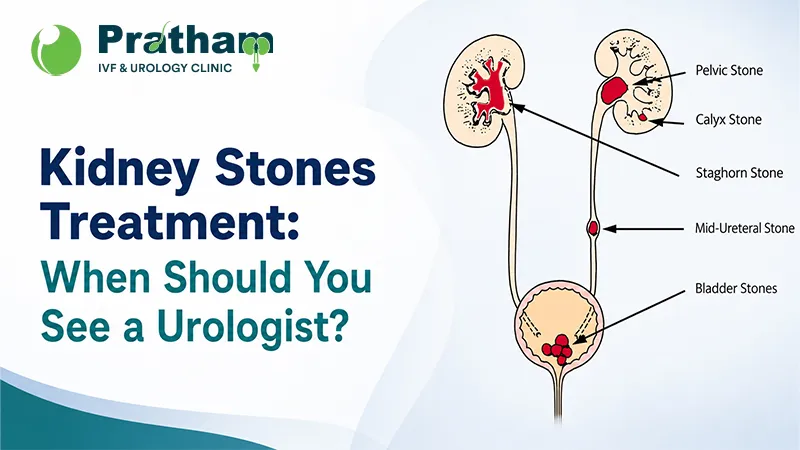
Kidney stones form when minerals and salts in urine crystallise and harden, either in the kidneys or elsewhere along the urinary tract. Small stones sometimes pass without much trouble, but larger ones or those that get lodged in the ureter can cause intense discomfort.
Symptoms That Shouldn't Be Ignored
- Sudden, severe pain in the back, side, or lower abdomen that comes in waves
- Urine containing blood, which could be pink, red, or brown
- Persistent nausea or vomiting alongside the pain
- Frequent urge to urinate combined with a burning sensation
- Fever and chills, which can signal an infection alongside the stone
Mild discomfort that comes and goes might not need urgent attention, but sudden severe pain, fever, or visible blood in the urine are all reasons to consult a Kidney Stone Specialist Near Me without delay.
When Home Management Isn't Enough
Small stones, typically under 4-5 millimetres, often pass on their own with increased fluid intake and pain management. But not every stone cooperates. If pain becomes unbearable, if there's a fever suggesting infection, or if the stone is too large to pass naturally, medical intervention becomes necessary rather than optional. If you wait too long in these circumstances, you run the risk of developing a more serious urinary tract infection or kidney damage from a protracted blockage.
Treatment Options Available
Depending on the size, location, and composition of the stone, a urologist has several treatment paths to choose from:
- Medical therapy, where medications relax the ureter's muscles to help smaller stones pass more comfortably
- Extracorporeal Shock Wave Lithotripsy (ESWL) is a non-invasive procedure that uses shock waves to break stones into smaller pieces.
- Ureteroscopy, where a thin scope is passed through the urinary tract to locate and remove or break up stones directly
- Percutaneous Nephrolithotomy (PCNL), used for larger or more complex stones through a small incision in the back
- Preventive care, including hydration guidance and dietary changes to reduce the chance of new stones forming
A specialist offering Best Kidney Stones/Urinary Stones Treatment in Ahmedabad will typically start with imaging to understand the stone's exact size and position before recommending which of these approaches fits your case.
Immunotherapy: Helping the Body Fight Back
Immunotherapy uses an entirely new method of treatment whereby it assists the body’s natural defenses against cancer cells. BCG therapy is a form of immunotherapy which is instilled directly into the bladder as a form of treatment in cases where there is non-muscle invasive bladder cancer in order to minimize the risk of recurrence following transurethral resection of the bladder tumor (TURBT).
Why Timing Matters
The decision to postpone the treatment of a stone that is already posing difficulties could result in complications that will be more difficult to handle than the stone itself. When there is a blockage of the ureter that is not treated, the effect on the kidney will be such that it will swell and eventually stop functioning.
Preventing Future Stones
Prevention is the next thing to be considered after treatment has taken place. Proper hydration, restricting salt and animal protein consumption, and adherence to diet guidelines for particular kinds of stones are ways to prevent the possibility of their formation in the future. Imaging techniques are used to detect new stones at an early stage.
Why Choose Us
With regards to patients with kidney and urinary stones, they receive treatment at Pratham Urology Clinic, from our experienced specialist who has 15 plus years of experience in endourology and minimally invasive stone treatment procedure with M. Ch in Genito-Urinary Surgery. At our clinic, we offer a comprehensive array of all stone treatments including medical management of small stones, ESWL, ureteroscopy, and PCNL without having to refer you to another facility during your treatment process. Our clinic offers round the clock service with emergencies in case of pain or obstruction. In addition, we ensure that you understand how to prevent stone recurrences after your treatment process.
Conclusion
Kidney stones may range from just an irritation to a serious health hazard. It is thus important to understand the signs that require immediate treatment. Intense pain, fever, and blood in the urine cannot just be ignored. Provided that there is an accurate diagnosis and proper treatment followed by prevention strategies, most people will recover completely from kidney stones and even prevent future occurrences.
If you're experiencing symptoms of a kidney stone or dealing with recurring episodes, timely treatment can prevent complications. Pratham Urology offers expert diagnosis and a full range of stone treatment options — call us at +91 9726274320 or schedule your appointment today.
FAQs
Kidney Stones Treatment Urinary Stones Ahmedabad Kidney Stone Specialist Ureteroscopy PCNL ESWL Kidney Stone Symptoms Dr Kalpesh Kapadia Urology Emergency Care Pratham Urology Clinic