
Table of Contents
- Introduction
06 January, 2026
By Admin
An undescended testicle can quietly worry parents. You may notice nothing at birth. Months pass. Doubt grows. This condition is common and treatable when handled on time. Clear information helps you act with confidence. This guide explains what an Undescended Testicle is, why it happens, how doctors diagnose it, and how modern treatment restores normal development. You will also learn when to seek care and what recovery looks like. Every section stays simple. Every point stays factual. Your child’s health deserves clarity, calm guidance, and timely action.
Understanding the Undescended Testicle Condition
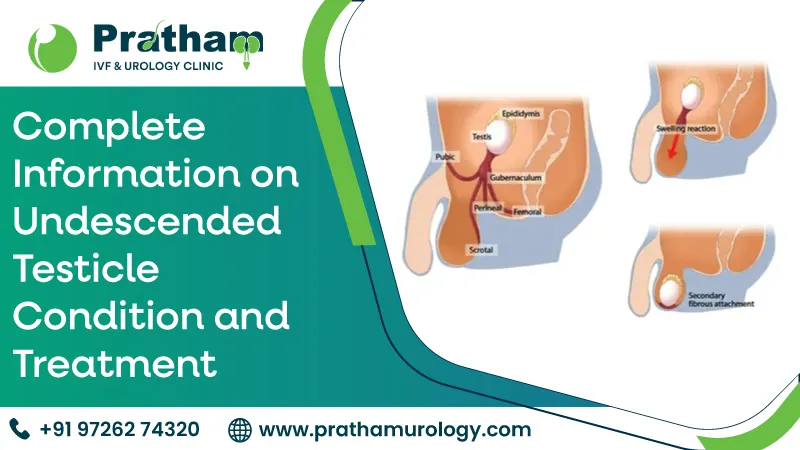
An Undescended Testicle means one or both testicles do not move down into the scrotum before birth or shortly after. Doctors call this condition cryptorchidism. During pregnancy, testicles form in the abdomen and usually descend into the scrotum by the last trimester. When this descent stops early, the testicle stays in the abdomen or groin.
This condition appears in about three percent of full-term male babies and more often in premature babies. In many infants, the testicle descends naturally within the first few months. When it does not, medical attention becomes important. Early care supports normal growth and future health.
Why the Testicle Does Not Descend
Several factors affect testicle descent. Hormonal signals guide movement. Muscle and tissue structures help pull the testicle into place. When any part of this process slows or stops, an Undescended Testicle may occur.
Premature birth plays a role because descent often completes late in pregnancy. Family history can increase risk. Low birth weight also links to higher occurrence. In many cases, doctors cannot point to one clear cause. What matters most is early evaluation and planned treatment.
Types of Undescended Testicle
Doctors classify the condition based on testicle position. A palpable testicle can be felt during examination, usually in the groin. A non-palpable testicle cannot be felt and may lie higher in the abdomen or may not have developed fully. Some testicles move back and forth, called retractile, and often settle naturally. True Undescended Testicle cases stay outside the scrotum.
Understanding the type helps doctors choose the right treatment path and timing.
Signs Parents May Notice
Most parents do not see pain or discomfort. The main sign is an empty or smaller-looking scrotum on one side or both sides. Paediatricians often detect the issue during routine newborn or infant checkups. As your child grows, regular exams stay important. If a testicle does not appear by six months, a specialist review is advised.
Why Early Treatment Matters
Leaving an Undescended Testicle untreated can affect long-term health. Higher body temperature inside the abdomen may impact sperm development later in life. The condition also raises the risk of testicular torsion and trauma. Early correction lowers these risks and supports normal hormonal function.
Medical guidelines recommend treatment between six months and one year of age. Acting in this window gives the best outcomes.
Diagnosis and Evaluation
Diagnosis starts with a careful physical exam. Doctors check both sides of the scrotum and groin. If the testicle cannot be felt, imaging may help. Ultrasound often supports location assessment, though direct examination remains the main tool.
Specialists may advise further evaluation if the testicle remains non-palpable. Each step aims to confirm position and plan safe correction.
Treatment Options for Undescended Testicle
Observation suits infants under six months because natural descent may still occur. When descent does not happen, surgery becomes the standard approach. Hormonal therapy sees limited use and does not replace surgery in most cases.
Laparoscopic Orchiopexy
Laparoscopic orchiopexy stands as the preferred surgical method for many cases of Undescended Testicle, especially when the testicle lies in the abdomen. Surgeons use small incisions and a camera to locate and move the testicle into the scrotum. This approach allows precision and faster recovery.
The procedure usually takes under an hour. Children often go home the same day. Discomfort stays mild and short-lived. Follow-up visits confirm proper position and healing.
What to Expect Before and After Surgery
Before surgery, doctors explain the process in detail. Basic blood tests and anaesthesia evaluation take place. Parents receive clear instructions for fasting and care.
After surgery, mild swelling or soreness may appear for a few days. Pain control remains simple with prescribed medicine. Normal activities resume quickly, with some limits on rough play for a short time. The success rate of orchiopexy remains high, especially when performed early.
Long-Term Outlook After Treatment
Children treated for an Undescended Testicle usually grow up with normal testicle position and function. Fertility outcomes improve compared to untreated cases. Regular follow-up during childhood and adolescence supports continued health.
Early surgery also allows easier self-examination later in life, which helps with early detection of rare complications.
Emotional Support for Parents
Learning about surgery for your child can feel stressful. Clear information reduces fear. Trust grows when you understand the condition and treatment steps. Choosing a specialized centre with experienced surgeons adds peace of mind. You are taking the right step by seeking timely care.
Why Choose Us
Pratham Urology focuses on precise diagnosis and advanced treatment for paediatric urology conditions. At Pratham Urology, every child receives personal attention from experienced specialists who understand both medical and emotional needs. The team uses modern laparoscopic techniques, clear communication, and careful follow-up to support safe recovery. Pratham Urology believes parents deserve honest guidance and children deserve gentle, expert care. Families trust Pratham Urology for consistent outcomes, ethical practice, and a supportive environment from first visit to full recovery.
Conclusion
An Undescended Testicle is a common condition with a clear treatment path. Early diagnosis and timely surgery protect your child’s future health. Modern procedures like laparoscopic orchiopexy offer safe correction with quick recovery. Parents play a key role by attending regular checkups and seeking specialist care when needed. With proper treatment, children grow with normal development and confidence. Reliable medical support, accurate information, and early action create the best results for your child’s well-being and long-term quality of life.
Best Key Takeaways
- An Undescended Testicle often appears at birth and needs early evaluation.
- Many cases need surgery if descent does not happen by six months.
- Laparoscopic orchiopexy offers safe and effective correction.
- Early treatment supports fertility and long-term testicle health.
- Expert paediatric urology care improves outcomes and parent confidence.
For complete guidance on Undescended Testicle condition and treatment, contact Pratham Urology today. Call +91 9726274320 or schedule your appointment now for trusted, child-focused care.