
Table of Contents
- Introduction
08 June, 2026
By Dr. Kalpesh Kapadia
Key Takeaways
- An undescended testicle occurs when one or both testicles fail to descend into the scrotum before birth.
- Early diagnosis of an undescended testicle is crucial to prevent future health issues such as reduced fertility.
- Treatment options for an undescended testicle include observation in infancy or surgical intervention when needed.
- Parents should monitor for any signs of an undescended testicle, such as an empty or partially empty scrotum.
- Regular follow-ups after treatment are essential to ensure proper testicular positioning and health.
Pratham Urology is a top-notch centre for advanced urological care that really gets what families need when they're dealing with the kind of thing that can make you worry sick - like a Undescended Testicle We're here to help you make sense of what's going on and give you the tools you need to get your child the best care possible.
As a parent, you can't blame yourself for feeling a bit anxious when you hear your little one's been diagnosed with an Undescended Testicle. I mean, the name itself can be pretty daunting at first. But the more you know about it the better equipped you'll be to make smart decisions about what's best for their health. And the thing is, if you catch this early on, you can actually help your kid develop properly and cut the chances of future problems.
What Is an Undescended Testicle?
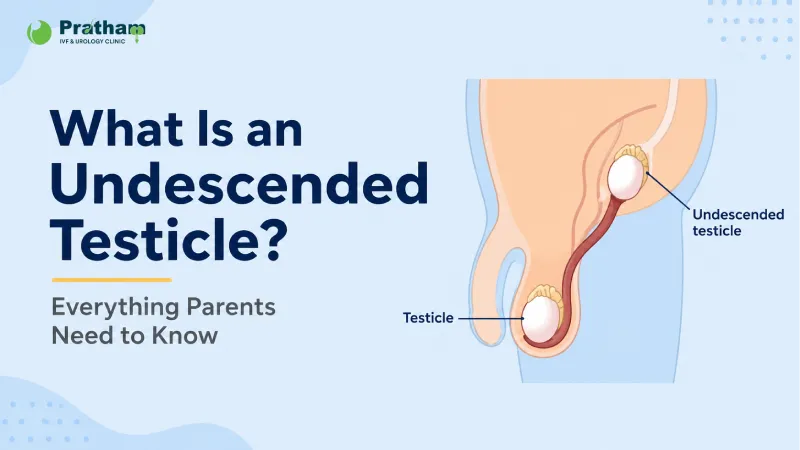
So, when one or both of a baby boy's testicles fail to make it into the scrotum before birth - that's what they call an undescended testicle. Normally, the testicles grow inside the belly while the baby is still in the womb and then make their way down into the scrotum as the little one grows. But, if one or both of them get stuck up there - that's what they call cryptorchidism or an undescended testicle - it can be a pretty common problem for newborn boys and it happens quite a lot. The good news is that sometimes these things sort themselves out naturally in the first few months after birth.
But, if the testicle is still stuck up there after six months - that's when things start to get a bit more serious and it's time to get the kid checked out by a doctor.
Why Does an Undescended Testicle Occur?
The exact cause is not always known. Several factors may contribute to the condition, including:
- Premature birth
- Low birth weight
- Family history of testicular conditions
- Hormonal influences during pregnancy
- Developmental factors affecting testicular descent
In most situations, parents should understand that this condition develops before birth and is not caused by anything they did during pregnancy.
Signs and Symptoms Parents Should Notice
An Undescended Testicle often does not cause pain or obvious discomfort. The absence of one or both testicles in the scrotum is the most typical symptom.
Parents may notice:
- An empty or partially empty scrotum
- One side of the scrotum appearing smaller
- A testicle that cannot be felt in its normal position
- Visible asymmetry in the scrotal area
Regular newborn and infant examinations often help identify the condition early.
Why Early Diagnosis Matters
Some parents wonder whether waiting longer may allow the testicle to descend naturally. While spontaneous descent can occur during the first few months, prolonged delay may increase the risk of future concerns.
An undescended testicle may be linked to the following conditions, hence early detection is crucial:
- Reduced fertility potential later in life
- Higher risk of testicular injury
- Increased likelihood of testicular torsion
- Greater difficulty in monitoring testicular health
- Psychological concerns related to appearance during adolescence
Prompt evaluation allows doctors to recommend the most suitable treatment plan at the right time.
How Is an Undescended Testicle Diagnosed?
Diagnosis usually begins with a physical examination performed by a qualified urologist.
The specialist may:
- Examine the child's abdomen and groin area
- Assess the position of the testicle
- Review birth and medical history
- Recommend imaging studies when necessary
A detailed assessment helps determine whether the testicle is located in the groin, abdomen, or another position.At Pratham Urology, we focus on accurate diagnosis and personalised treatment planning based on each child's condition.
Treatment Options for an Undescended Testicle
Treatment depends on the child's age and the location of the testicle.
Observation During Early Infancy
If the child is very young, the doctor may monitor the condition for a short period because some testicles descend naturally during the first few months after birth.
Surgical Treatment (Orchiopexy)
When the testicle remains undescended, surgery is often recommended. Orchiopexy is a commonly performed procedure designed to move the testicle into the scrotum and secure it in the correct position.
Benefits of treatment include:
- Supporting normal testicular development
- Improving future fertility prospects
- Allowing easier examination of the testicle
- Reducing certain long-term risks
Laparoscopic Orchiopexy
For testicles located higher in the abdomen, laparoscopic techniques may be used. This minimally invasive approach allows the surgeon to locate and position the testicle with precision.
Pratham Urology offers advanced evaluation and treatment options, including laparoscopic procedures when appropriate.
What Happens After Treatment?
Recovery is generally smooth, and most children return to normal activities within a short period following surgery.
Parents are usually advised to:
- Attend follow-up appointments
- Monitor healing as instructed
- Follow post-operative care recommendations
- Report any unusual swelling or discomfort
Regular follow-up helps confirm that the testicle remains in the correct position and continues to develop normally.
When Should Parents Consult a Specialist?
You should seek medical advice if:
- In the scrotum, one or both testicles are hidden.
- It has been determined that your child has an undescended testicle.
- You notice changes in the scrotal appearance
- The testicle appears to move in and out of the scrotum
- You have concerns regarding your child's reproductive health
Early consultation can provide clarity, reduce anxiety, and help determine the best course of action.
Why Choose Us
At Pratham Urology, we get that parents want straightforward answers to their questions and genuinely caring doctors who'll look after their child's wellbeing. Our team brings together top-notch expertise in urology for kids, paired up with super modern diagnostic and surgical techniques - all with the aim of giving kids the very best care possible for an Undescended Testicle. We put a big focus on getting a proper diagnosis, tailoring treatment plans to each individual child, and being there to support them every step of the way. Our main goal is to help families feel informed, comfortable, and confident with each decision they make, every step of the way - whether that's the initial consultation or months of follow-up care. And that's what makes Pratham Urology a top choice for families looking for top-notch pediatric urology services - we put patients first, every time.
Conclusion
An Undescended Testicle isn't a major cause for concern but as a relatively common childhood condition, it's definitely worth getting checked out. In all reality the condition might not be causing any problems but catching it early is really important both for ensuring healthy development and reducing the risk of future problems. For parents, understanding the condition is a big help when it comes to making informed decisions about the best course of action. If it's noticed that a testicle hasn't dropped down into the scrotum - or both haven't - getting in to see a specialist urologist is the smartest move to make. The good news is that with the right treatment and medical care, most kids go on to lead healthy, normal lives..
Concerned about an Undescended Testicle in your child? Contact Pratham Urology today for expert evaluation and advanced treatment options. Call us at +91 9726274320 or schedule your appointment to discuss the best care plan for your child’s health and future well-being.
FAQs
Undescended Testicle Pediatric Urology Orchiopexy Child Health Testicular Disorders Urology Car3 Laparoscopic Surgery Male Reproductive Health Children's Health Pratham Urology