
Table of Contents
- Introduction
03 July, 2026
By Dr. Kalpesh Kapadia
Key Takeaways
- Prostate cancer surgery in Ahmedabad is recommended when cancer is localized but aggressive, indicating a higher spread risk.
- Monitoring through active surveillance may be suitable for slow-growing, low-risk prostate cancers.
- Signs like elevated PSA levels and abnormal digital rectal exam findings often warrant surgical consultation.
- Post-surgery recovery includes regular PSA testing and monitoring of urinary or sexual function changes.
- Minimally invasive surgical techniques typically lead to shorter hospital stays and faster recovery times.
Pratham Urology is a leading provider of uro-oncology care in Ahmedabad, and this guide breaks down exactly when surgery becomes the right path, what the procedure involves, and what recovery actually looks like.
Understanding When Surgery Becomes Necessary
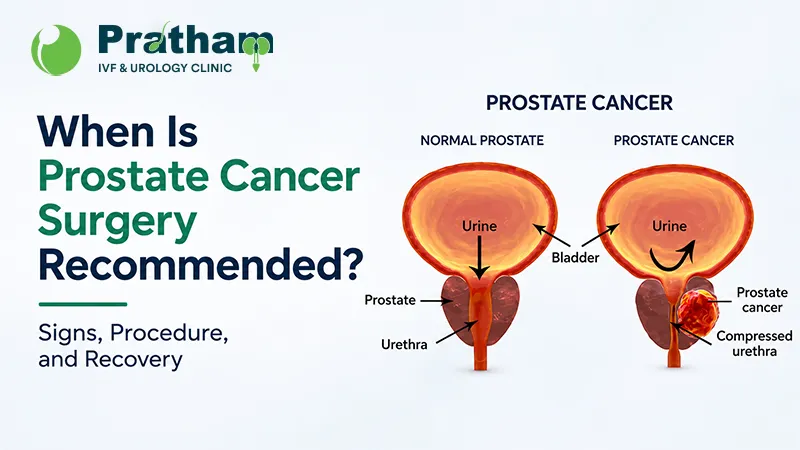
Not every prostate cancer diagnosis calls for immediate surgery. Some slow-growing, low-risk cancers are managed through active surveillance, where the patient is monitored closely with regular PSA tests and biopsies instead of undergoing an operation right away. Surgery typically becomes the recommended path when the cancer is localised to the prostate but aggressive enough that leaving it untreated risks spread, or when imaging and biopsy results point to a tumour that surgery can remove completely.
Signs That Often Lead to a Surgery Recommendation
- Elevated and rising PSA levels over multiple tests
- Abnormal findings on a digital rectal exam
- Biopsy results confirming a moderate-to-high grade tumour
- Imaging showing cancer confined to the prostate gland
- Symptoms such as difficulty urinating or blood in the urine linked to tumour growth
When these signs appear together, a consultation with a specialist in Prostate Cancer Surgery in Ahmedabad helps determine whether the cancer is still confined enough for surgical removal to offer the best long-term outcome.
What the Procedure Involves
The standard surgical approach for localised prostate cancer is a radical prostatectomy, where the entire prostate gland along with some surrounding tissue is removed. This can be performed through open surgery, laparoscopically, or with robotic assistance, depending on the case and the equipment available at the treating centre. Robotic and laparoscopic techniques use small incisions and magnified 3D visualisation, which generally allows for more precise tissue handling around the nerves and blood vessels near the prostate.
During the procedure, the surgeon works carefully to remove the cancerous tissue while attempting to preserve nearby nerve bundles that control urinary and sexual function wherever the cancer's location safely allows it. Experienced Prostate Cancer Surgeons in Ahmedabad weigh this balance case by case, since preserving function matters just as much as removing the disease completely.
What Recovery Looks Like
Recovery timelines vary based on the surgical approach and the patient's overall health. Minimally invasive techniques generally allow for a shorter hospital stay and quicker return to daily activities compared to open surgery. In the days following surgery, patients typically have a catheter in place to allow the urinary tract to heal, which is usually removed within one to two weeks.
Common aspects of the recovery period include:
- Gradually resuming regular activities over a few weeks
- Pelvic floor exercises to support bladder control recovery
- Regular follow-up PSA testing to confirm the cancer has been addressed
- Monitoring for changes in urinary or sexual function during healing
Most patients see steady improvement in bladder control over the weeks and months following surgery, though the exact pace differs from person to person. Working closely with a Prostate Cancer Specialist in Ahmedabad during this period makes it easier to catch and manage any complications early.
Life After Surgery
After passing the initial stage of recovery, patients typically resume their normal schedules through PSA testing. The follow-up consultations revolve around assessing whether the PSA is still low, implying that the cancer is gone. It is important to report any unusual symptoms – whether relating to urination or others – as soon as possible, without having to wait for the next consultation.
Why Choose Us
The specialists at Pratham Urology, are available for patients suffering from the disease of prostate cancer and offer a specialist who has more than 15 years of experience in the speciality, as he has an MCh in Genito-Urinary Surgery along with specialized experience in Laparoscopy and robotics. Each individual patient’s situation is explained by us as we discuss whether active surveillance or surgery is better for him/her, rather than opting for a generic treatment method. Modern methods of diagnosis and surgery are available to us at our clinic, which help us remove tumors surgically in a manner that protects the nerves as much as possible.
Conclusion
The decision to undergo prostate cancer surgery is not easy, but the knowledge of the factors that indicate the need for surgery and the process of recovery will help in the process. Surgery is not always the recommended treatment method, and an evaluation of the patient’s PSA levels and biopsy is carried out to establish the best approach to take. An interaction with a specialist during diagnosis, surgery, and recovery period is the best choice to ensure a successful experience.
If you or a loved one has received a prostate cancer diagnosis and are weighing your treatment options, don't navigate it alone. Pratham Urology offers expert consultation to help you understand whether surgery is right for your case — call us at +91 9726274320 or schedule your appointment today.
FAQs
Prostate Cancer Surgery Prostate Cancer Surgeons Ahmedabad Prostate Cancer Specialist Robotic Prostatectomy Laparoscopic Prostatectomy PSA Testing Uro-oncology Ahmedabad Dr Kalpesh Kapadia Prostate Cancer Treatment Pratham Urology Clinic